ChessAIThon
Strategic Gaming, Coding, and AI in VET Education

- How computers represent Chess boards and moves?
- How can I store boards and moves?
- How Chess AI works?
- How to train an AI for Chess?
- How to use AI to get the best move?
- How can I use my intelligence to improve AI?

How computers represents Chess scenarios and moves?
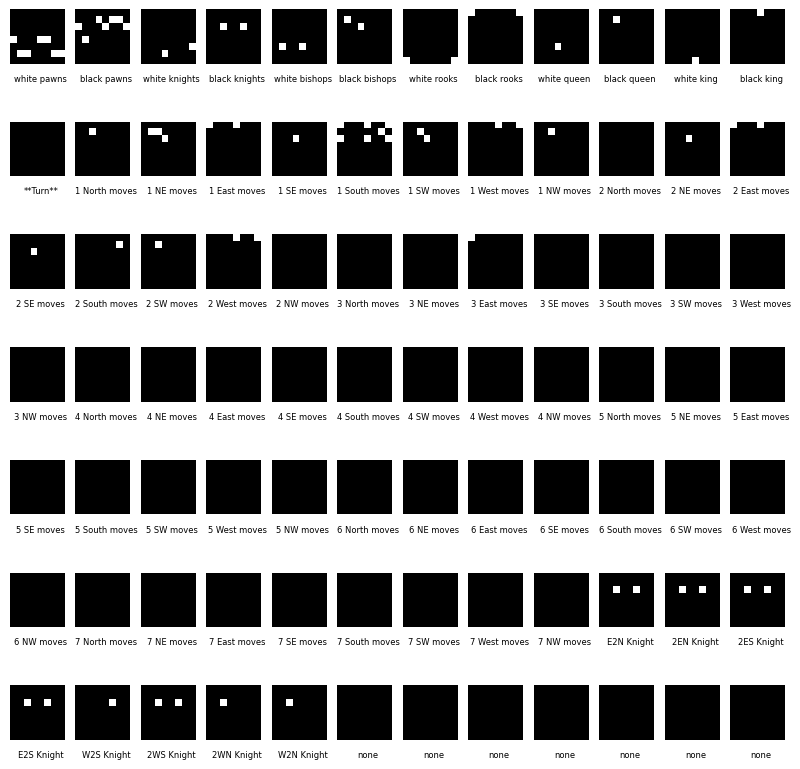
- Bitboards: 64-bit integers representing squares. Highly efficient for bitwise operations.
- Board Arrays: Simple 8x8 grids for piece tracking.
- Human Formats: FEN (snapshot) and UCI/SAN (move notation).
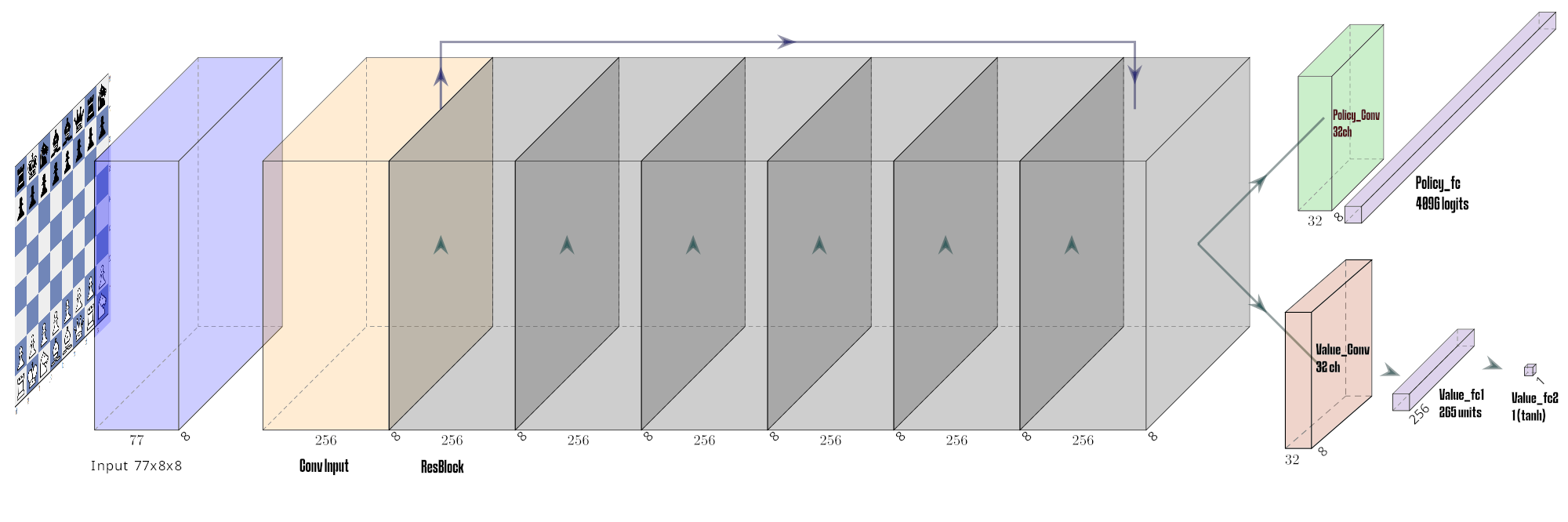
- AI Input (77x8x8):
- 12 layers for piece positions.
- 1 layer for turn indicator.
- 64 layers for legal move masks.
How can I store scenarios and moves?
- Standard Formats: PGN (Games), FEN (Positions). rnb1k1nr/pppp1ppp/5q2/2bP4/8/5N2/PPP1PPPP/RNBQKB1R w KQkq - 3 6
- Data Science Stack: CSV for simplicity, JSON for web APIs.
- Parquet: Columnar storage with int64 compression, reducing 10GB datasets to 1.5GB.
- Version Control: Using Git/GitHub to manage dataset iterations and collaborative student contributions.
How Chess AI works?
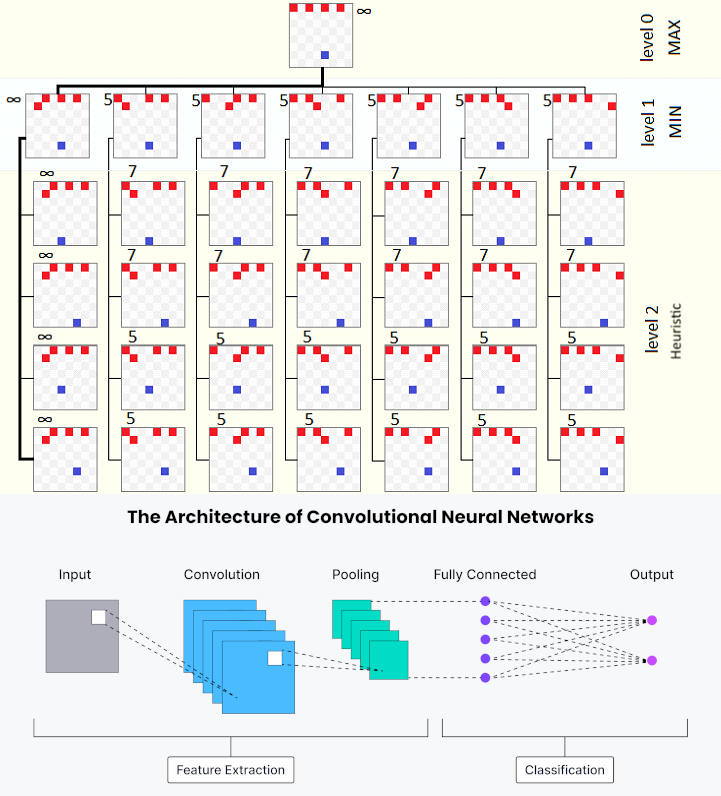
- Rule-based Systems: Brute-force calculation (Deep Blue).
- Alpha-beta Search: Heuristic evaluation (Stockfish).
- Modern Neural Networks: Intuition-based move prediction (AlphaZero).
- Hybrid Model (ChessAIThon):
- NN: Provides "intuition" (Policy + Value).
- MCTS: Provides "calculation" (Look-ahead search).
How to train an AI for Chess?
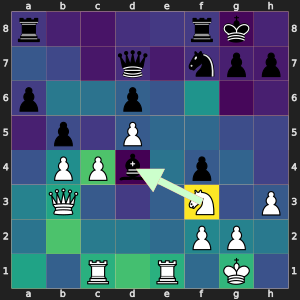
- Our Choice: Supervised learning from a curated dataset of human and simulated games.
- Learning from Data: Comparing NN predictions with the "best move" targets.
- Human-Centric: Trained on student moves to model human-like playstyles and complexity.
Deep Learning
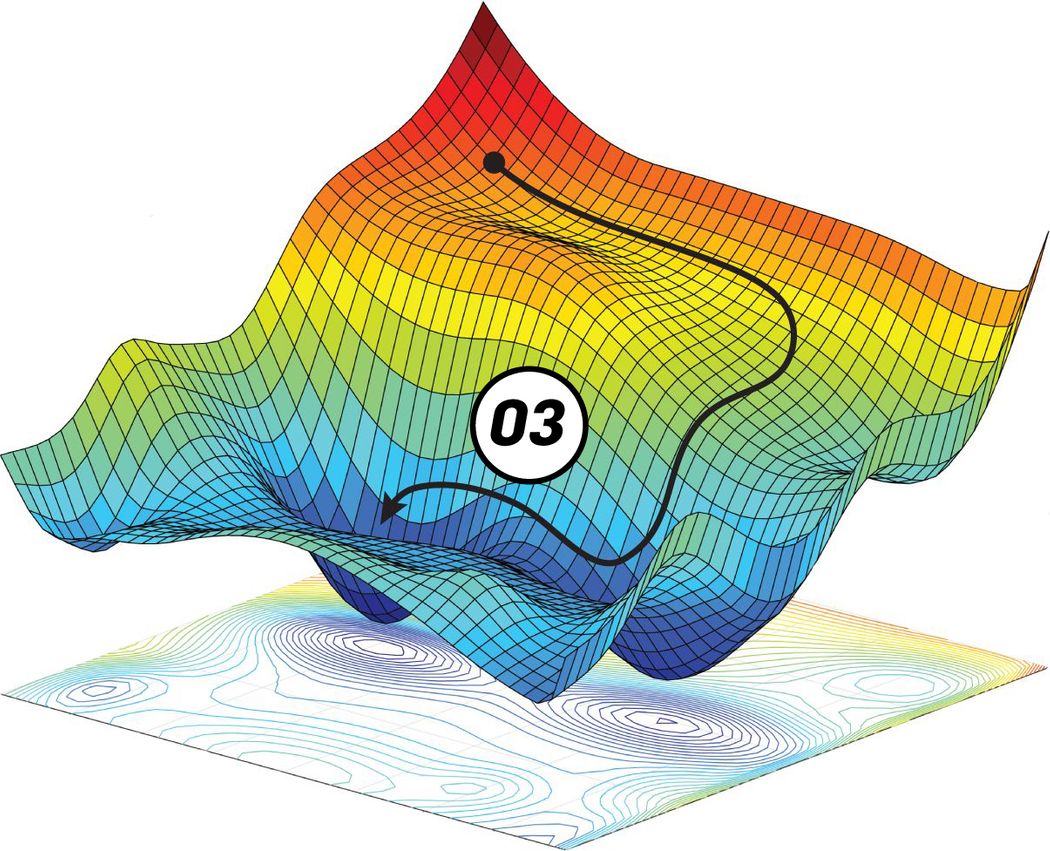
- Each problem is a mathematical function with many parameters. We try parameters and check if returns the appropiate Y for the X
- Loss and Gradient Descent We try to minimize Loss and we try better parameters in the way to descent.
- Learning Rate: If we learn too fast we can miss the minimum.
- Architecture: We choose Convolutional Networks because chess has the same architecture as an image: 8x8 pixels of some color depth.
CNN
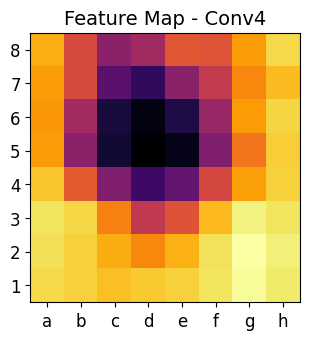
- Bitboard representation: 77x8x8
- Chess is like an image: 8x8 pixels of 77 bits of color depth.
- Output:
- Policies: Probability distribution over 4096 possible moves.
- Value: Predicting the win/loss outcome ([-1, 1]).
ChessNet
- CNN layers: For spatial feature extraction (piece patterns, tactical motifs).
- Full Connected layers: For integrating global board information and final predictions.
- Residual Tower: For deeper feature learning without vanishing gradients.
Dataset
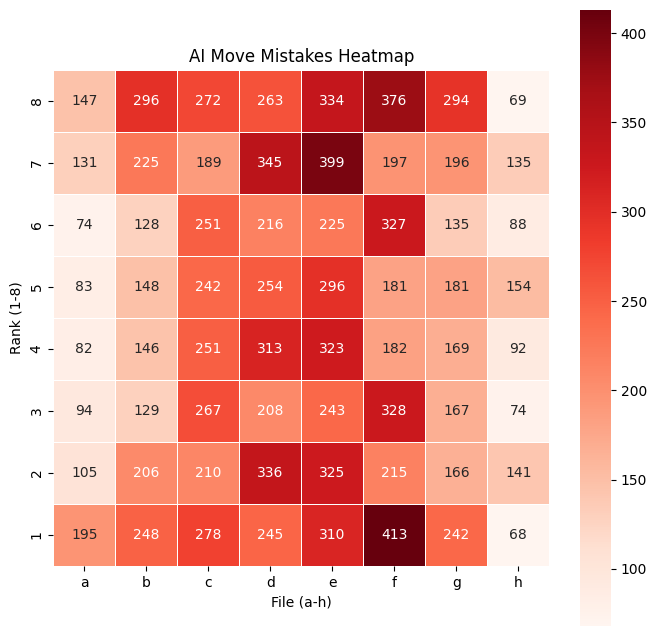
- Source: Leela Chess Zero simulations (400 nodes) and Lichess puzzles.
- Volume: ~4,500,000 scenarios in Parquet format.
- Diversity: Includes balanced positions, tactical puzzles, and mate-specific scenarios.
- Refinement: Filtering out "decided" positions to prioritize informative learning signals (0.1 < |Value| < 0.7).
Results
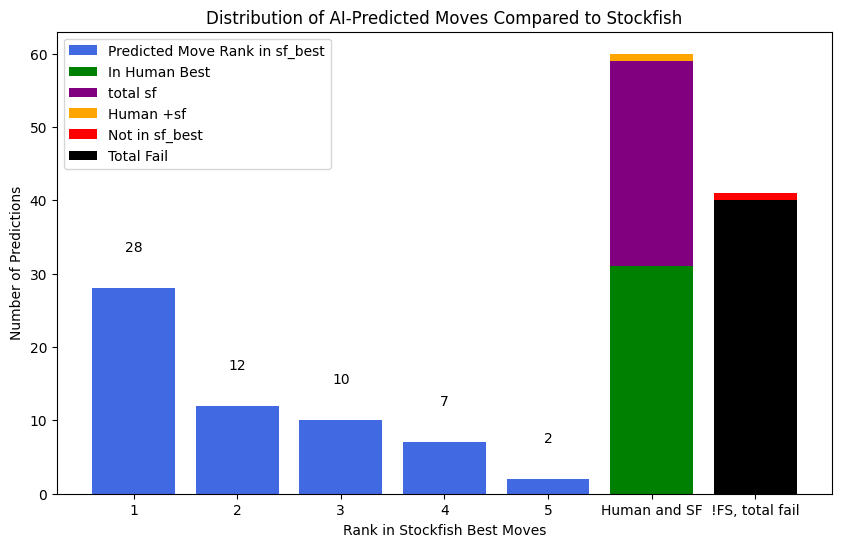
- Top-1 Accuracy: ~30% (Matching Stockfish's perfect move).
- Top-5 Accuracy: ~70% (Sufficient to prune MCTS search space).
- Success: Even modest accuracy leads to strong strategic play when paired with MCTS.
How to get the best move?
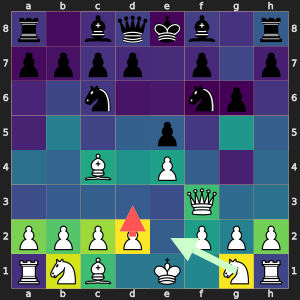
- MCTS Guided Search: Simulation explores branches prioritized by the CNN Policy.
- Exploration (PUCT): Balancing known good moves with less-explored alternatives.
- Noise: Dirichlet noise at the root node ensures variety and prevents deterministic traps.
How can I use my intelligence to improve AI?
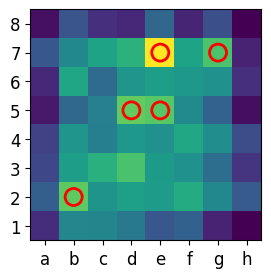
- ChessMinds Web App: Play against other humans and contribute your best moves to the dataset.
- Fine-tuning: Use provided Notebooks to retrain the CNN on your personal games.
- Community: Modify architecture parameters or weights and share your version on HuggingFace.
Links

- ChessMinds Web App: https://chess-ai-thon.vercel.app/
- GitHub: https://github.com/xxjcaxx/ChessAIThon
- HuggingFace Spaces Endpoint: https://jocasal-chessAIthon.hf.space/predict
Thank You
Questions & Collaborative AI Development
GitHub: xxjcaxx/ChessAIThon